
B2B Prospecting Has a Budget, and It Isn't Money
By Pitchlane team · June 19, 2024 ·

B2B prospecting has one budget that matters: the number of real buyers in your market. Every cold email spends some of it, and nobody gives you a refund on a prospect who has already filed you under spam. Most teams set their prospecting strategy by asking how much they can send. Ask how many buyers you can afford to burn.
If you own pipeline, whether you’re a founder, a head of sales or the GTM engineer who ends up running it all, this page is about what to fund. If you’re after the week-by-week work of building your first campaign, our step-by-step B2B sales prospecting guide has the copy and the calendar.
The maths your dashboard hides
Say you want 20 meetings a month from cold email. Sales.co published a clean run of 143 meetings from 235,941 emails, or one for every 871 contacts. Using those numbers:
- 20 meetings takes 17,420 contacts and about 33,000 emails
- 33,000 emails takes 50 mailboxes at 30 sends a day, about $420 of Google Workspace
- Add $97 for Instantly and around $350 of list cleaning, and you’re near $870 before data
That’s about $43 a meeting. Any CFO would sign it, which is how teams end up here. Then count the other column. How many people actually buy what you sell? Plenty of B2B companies have 8,000 reachable buyers, tops. At this rate those 8,000 give you nine meetings, once, and a market that recognizes your domain as noise.
Now run the same market at a higher conversion rate. Hoani reports a 5% meeting-book rate with personalized video. That’s his result, so halve it to be unkind. At 2.5%, 20 meetings takes 800 leads, and 1,000 video credits cost $97. The same 8,000 buyers are worth 200 meetings.
Dollars say volume is cheap. Your market says it’s the most expensive thing you can do. Every B2B prospecting decision below follows from this: raise the conversion rate per contact before you raise the contact count.
Is outbound even worth funding?
Yes, and the “outbound is dead” crowd should look at the efficiency data. Ebsta and Pavilion scored channels on win rate times deal size, divided by sales cycle: partner referrals 1.3x, organic inbound 1.2x, outbound 1.05x, events 0.78x and paid 0.68x.
That means outbound beats your trade show booth and your LinkedIn ads. The problem is usually bad execution bought at high volume. Reps spend nearly a full day a week prospecting, and 48% still say they lack the bandwidth for cold outreach, which tells you most of that day is going on the wrong work.
Which B2B prospecting methods get the money
Fund them in this order, and don’t start the next until the last one is running. For the ranked tactics and the numbers behind each, see our sales prospecting techniques breakdown.
Warm paths first. Customer referrals top the efficiency table and cost almost nothing, and most companies still have no one responsible for asking. Give this an owner and a monthly number.
LinkedIn to people who already know you. In one team’s data across 19,043 leads, messages to an existing network drew 11.3% human replies and an engaged audience 9.6%, against 0.3% for list-based cold email. You’re limited by the size of your network and by LinkedIn’s limits, so this tops out quickly. Take it all anyway.
Cold email with something the other 40 don’t have. This is your scale channel, and the only one that reaches your whole market at a few cents a lead. Its failure mode is sameness, so that’s what your money should go at. We think personalized video is the strongest fix available: same recording, their website behind you, and Safwan’s positive reply rate went from 1% to 6%.
The phone, for accounts worth a human. On Gong’s numbers the average rep needs about 402 dials per meeting and a top-quartile rep about 45. Both figures are our arithmetic from Gong’s connect and set rates. That gap is a coaching problem and a data problem, so don’t fund phones until you can pay for direct dials and someone who’s good at it.
How do you find B2B sales prospects without burning the list?
Build your list from your closed-won deals, working backward. Pull your last 20 wins and write down what they shared at the moment they bought. Headcount and industry are the starting point. The useful filters are specific: they use HubSpot, they hired their first SDR, they run paid search, their site has a pricing page. Build the list in GetLeads, which searches by title, industry and company size, gives you 1,000 free credits to prove the segment, and then charges a flat $497 a month however many people pull from it. Apollo is the alternative if you’d rather have sequencing in the same tool and don’t mind per-seat credits.
Then cut your market into segments of a few hundred people who share a problem you can describe in one sentence. Each segment gets its own pitch. If you can’t record one video that would feel relevant to all 300 of them, the segment is too broad, and that test is more honest than any ICP worksheet.
Signals tell you when to reach a segment, and they get oversold. Digital Bloom reported 10.01% reply rates for timeline-based hooks against 4.39% for problem-based ones, and every vendor with a signals product has quoted it since. Salesmotion’s own hiring-trigger emails drew zero human replies from 459 leads. Use signals to sort your queue. They won’t save an email nobody wants to read.
Who should run B2B prospecting?
A founder, until you have a message that works. Nobody else can change the offer mid-campaign. Hire too early and you’ve paid someone to discover your positioning is wrong, slowly. Under $1M in revenue, this one is yours.
An SDR once it’s a playbook. A hire should inherit a working segment, a working pitch and a known conversion rate. Give them 500 proven leads a week and judge them on meetings held. Then take the research off their plate, because a rep hand-writing first lines is your most expensive way to make a mediocre email.
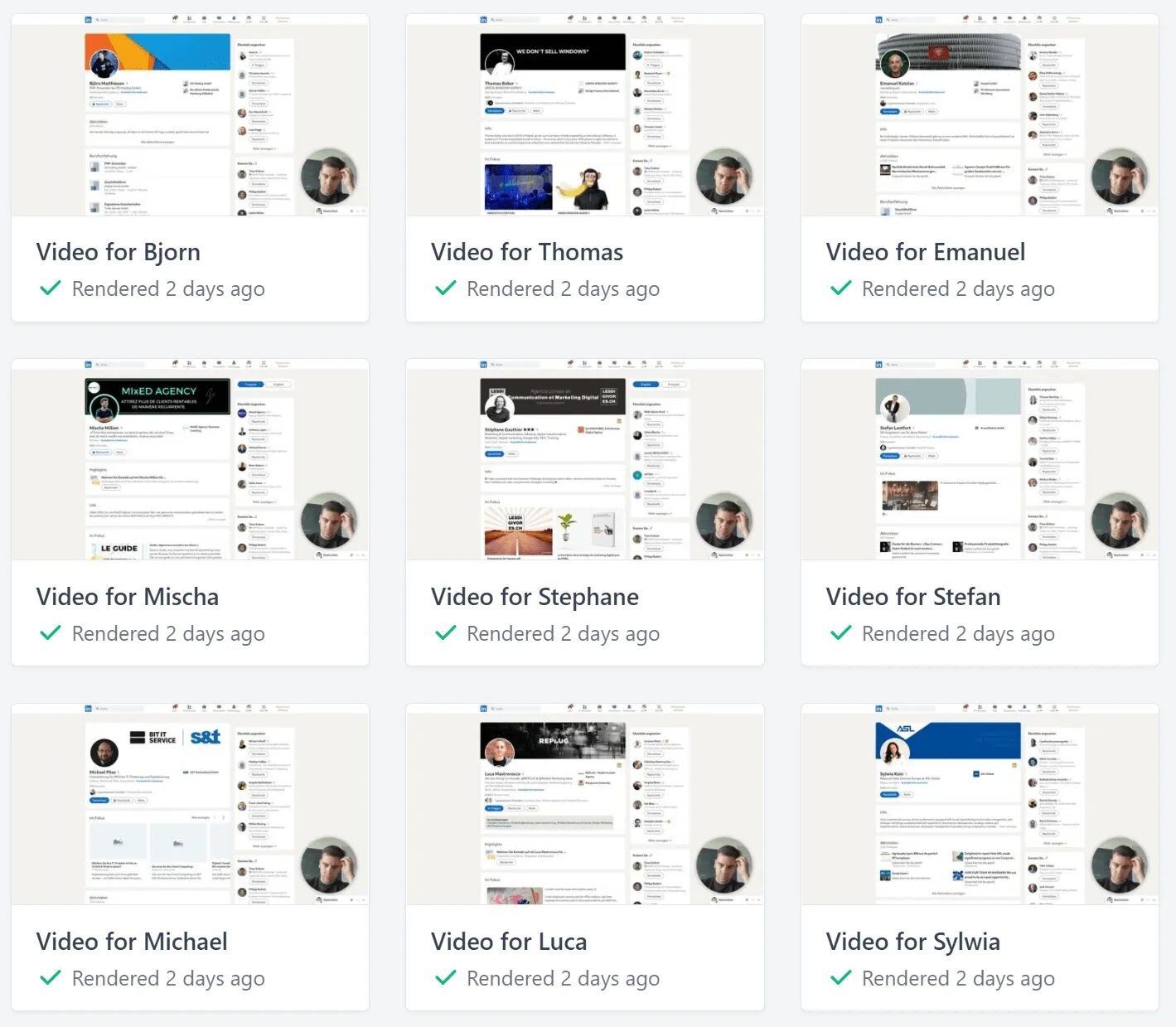
A GTM engineer once you’re running several segments. This is the person who wires Clay, your sender and your CRM so that a new segment takes an afternoon. Pitchlane’s REST API and webhooks fit in here, so videos generate as leads enter a table, and GetLeads’ API and MCP server, both on its free plan, are the data end of that pipe. We price the whole stack for three team sizes in our email prospecting tools guide, and B2B sales tools covers what sits around it. Hire one when your bottleneck is plumbing. Before that, you’ve got someone automating a campaign that doesn’t work yet.
An agency when you can judge the output. Pay for meetings held by your ICP. Ask them what they do to protect your domains, and what share of your market they plan to contact in the first quarter. If the answer sounds like “all of it”, leave.
What to measure
Throw out open rates. Then watch these, in this order.
| Metric | Why it matters | What to compare it against |
|---|---|---|
| Market remaining | The budget this page opened with | Reachable buyers not yet contacted, in months of runway |
| Meetings held per 1,000 contacts | The number that decides whether you scale | About 1.1 is what a plain campaign produced |
| Human reply rate | The fastest honest signal | About 1% is realistic. 0.45% across 7.5M emails, auto-replies removed, is the floor |
| Bounce rate | Your early warning on list quality | Under 2% |
| Spam complaint rate | The one that can kill the domain | Under 0.10%, never 0.30% |
Watch out for vendor benchmarks that count auto-replies as replies: Instantly’s 3.43% average includes them, and only covers campaigns run on Instantly. Put your own numbers in our ROI calculator and you can see what a single point of reply rate is worth in revenue.
B2B prospecting best practices we’d drop
“Personalize every email.” Hand-research on every prospect means either 20 leads a day or fake research. Personalize at the segment and the video background, where the work happens once.
“It takes 8 to 12 touches.” Instantly’s data has 58% of replies landing on step one and a sweet spot of 4 to 7 touches. Sending a twelfth email to someone who ignored eleven just raises your complaint rate.
“Fill the top of the funnel.” That advice was written when lists felt infinite and spam filters were weak. Yours is a finite market, and you’re spending it.
Test it on the segment you’d hate to lose
Take your best 250 prospects, the ones you’ve been afraid to burn on another plain-text sequence. Pitchlane’s 14-day trial includes 250 videos and plugs into the sender you already use. One recording, 250 videos, each with that prospect’s website behind you. More than 1,000 companies already send this way, so you’ll know within a month whether your market is worth more than your sending volume assumed.
Questions
Frequently asked questions
What is B2B prospecting?
B2B prospecting is finding the companies and people who could buy from you and starting the conversation before they come looking. It's the outbound half of pipeline, and the thing most teams get wrong is treating their market as infinite. Every cold touch spends a buyer you can't get back, so the job is conversion per contact first and volume second.
What are the best tools for outbound prospecting?
GetLeads for data (Apollo if you want sequences in the same tool), ZeroBounce to clean it, Instantly or Smartlead to send, and Pitchlane for per-lead personalized video. A founder working 500 leads a month pays $141 while GetLeads' free credits last, and $638 after. That stack scales to an agency without changing a single tool.
What are the most effective B2B prospecting methods?
In order: customer introductions, LinkedIn messages to people who already know you, personalized video to a cold list, and the phone for accounts worth a human. Plain cold email sits near the bottom at about 1% human replies, and AI-written first lines are last. Fund them in that order and don't start the next until the last one is running.
How many B2B prospects do I need to contact each month?
Divide your meeting target by your measured contact-to-meeting rate, then check the answer against the buyers you have left. Published cold email data suggests about 1 meeting per 871 contacts, which means 20 meetings costs you 17,420 prospects. If that eats your market within a year, fix your conversion before adding volume, because volume is the one thing you can't undo.
What is a good B2B prospecting conversion rate?
About 1% human replies on plain cold email, and roughly one held meeting per 871 contacts. Those are realistic averages, and Belkins' 0.45% across 7.5 million emails is the floor. Our customers report far more with personalized video, such as Hoani's 5% meeting-book rate, but treat those as what's possible on a good segment rather than what a first campaign will do.
What is the difference between B2B prospecting and lead generation?
Prospecting is you choosing the buyer and reaching out; lead generation is building the machine that makes buyers come to you. Both fill pipeline, and Ebsta and Pavilion score outbound at 1.05x deal efficiency against 1.2x for organic inbound. Outbound wins on speed, since it produces conversations in weeks, and on control, since you pick exactly who gets contacted.
Is B2B prospecting worth it compared with inbound?
Yes, if you do it well. Ebsta and Pavilion scored outbound at 1.05x on deal efficiency, against 1.2x for organic inbound, 0.78x for events and 0.68x for paid, so it beats your trade show and your ads. Outbound also starts producing conversations in weeks, while organic takes far longer to build. Most of the bad reputation comes from bad execution at high volume.
What are B2B prospecting best practices?
Work segments of a few hundred people who share one problem, verify every address, keep sequences to four to seven touches, and judge campaigns on human replies and meetings held rather than opens. Drop the ones everyone repeats: hand-personalizing every email, sending twelve touches, and filling the top of the funnel. Personalize where the work happens once, at the segment and the video background.
How do you find B2B sales prospects?
Start from your last 20 closed-won deals and write down what they shared at the moment they bought, then search for more of them. GetLeads filters by title, industry and company size and gives you 1,000 free credits to prove the segment. If one recorded video wouldn't feel relevant to all 300 people on the list, the segment is too broad.
Who should do B2B prospecting: the founder or an SDR?
The founder, until there's a message that works, because nobody else can change the offer mid-campaign. Hire an SDR once there's a proven segment, pitch and conversion rate to inherit, and a GTM engineer once several segments need wiring together. Hire an agency only when you can judge the output, and pay for meetings held by your ICP.