
Lead Nurturing Emails: 5 Examples, Roasted and Rewritten
By Pitchlane team · July 18, 2024 ·

A good lead nurturing email reacts to something the lead did, comes from a named person, asks for one thing and takes 20 seconds to read. Most of what gets sent is a newsletter in disguise: scheduled by calendar day, signed by a brand, and asking for nothing. Below are the five types worth sending, with real examples, what each one gets wrong, and B2B copy you can paste into your sequencer today.
First, retire the statistic. “Nurtured leads make 47% larger purchases” has been credited to The Annuitas Group for over a decade, and LeadSpot’s audit of the most-repeated nurture stats couldn’t find a public primary source for it. If a deck you’re reading leans on that number, the author didn’t check either. The evidence you actually need is your own reply rate on the next 200 leads.
1. The welcome email: spend the attention you just earned
Someone who has just handed over an email address will never be more interested in you. Most welcome emails use that moment to say thanks and promise “valuable content”. Noah Kagan’s welcome to Email1K does much better:
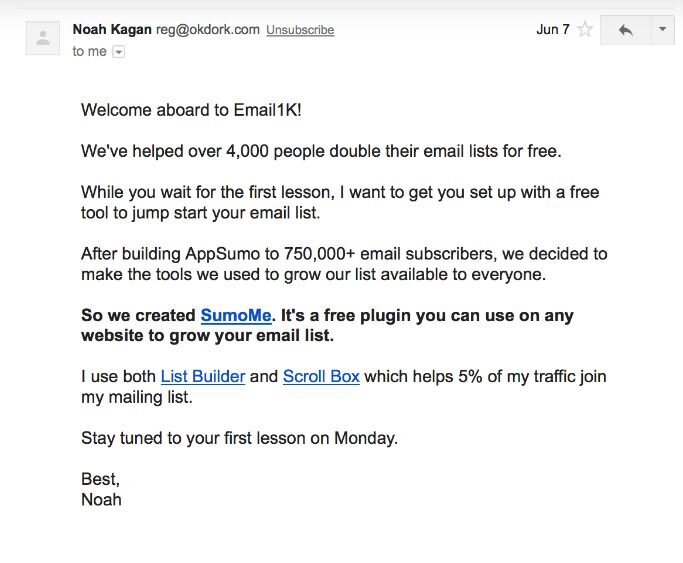
Noah’s email is plain text, signed by a person, and gives you a tool before you’ve been asked for anything. It includes one specific number from his own site: 5% of his traffic joins his list. The weak spot is the ending. “Stay tuned” asks for nothing, when a reader this interested would happily answer a question.
That screenshot is a consumer newsletter. Here’s our rewrite of the same move for a B2B demo or content signup:
Subject: you downloaded the outbound benchmark
Hi {{first_name}}, Sam here. Most people grab that report because reply rates dropped and nobody can say why.
Is that you, or did you want it for something else? Reply with one line and I’ll send the two pages that apply.
The reply is the point. Every answer tells you which segment they belong in, and it trains their inbox to treat you as a person they talk to.
2. The educational email: teach one thing or don’t send it
Educational emails fail when they are thinly disguised blog promotion. Here’s a Process Street email that gets halfway there:
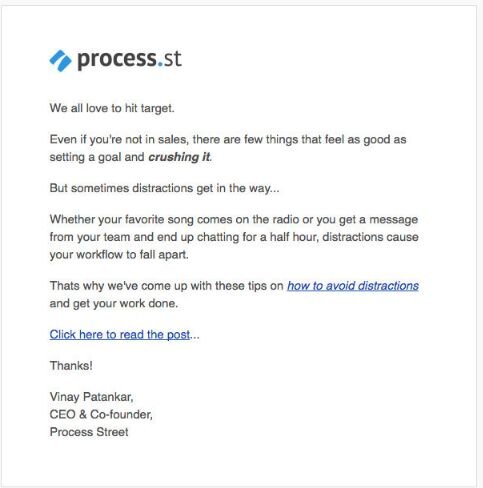
Good about the Process Street email: it’s short and signed by the CEO. Bad: “distractions get in the way” could be about anyone on earth, and the whole value of the email sits behind a click. Put the insight in the email, and make the link optional.
Our sharper version of that email, written for an outbound reader:
Subject: the 80-word rule
{{first_name}}, one number from Instantly’s 2026 benchmark: their best-performing senders average under 80 words in the first email.
Take your best-performing step one and cut it to 80 today. If your reply rate drops, tell me and I’ll eat my words.
The number comes from Instantly’s cold email guide, and the reader can act on it before finishing their coffee, and that’s the bar for every educational send.
This is also where video earns its keep. A one-minute explanation with the prospect’s own website behind you beats a link to a blog post, and with Pitchlane you record it once for the whole segment. The background changes per lead, the recording stays the same, and their name sits in the email and the title.
3. The promotional email: be blunt about selling
Selling to people who asked to hear from you is fine. Pretending you aren’t is the insulting part. Here’s Lucid’s product newsletter:
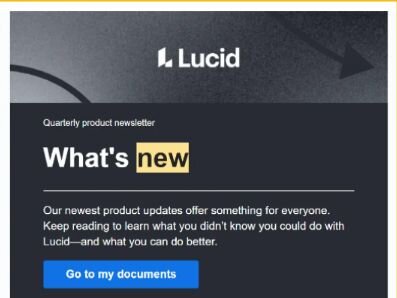
Lucid’s email is clean and on-brand, and “something for everyone” is the problem. A reader who has never used the feature you’re announcing has no reason to care that it’s new. Send product news only to the segment whose problem it solves, and name the problem in the first line.
Here’s how we’d send that product news to one segment instead:
Subject: you asked about Salesforce sync
{{first_name}}, on our call you said the blocker was Salesforce sync. It shipped Tuesday.
Worth 15 minutes next week to look at it on your account? Here’s my calendar: {{booking_link}}
Three short sentences beat any “What’s new” template, because the lead told you what they wanted and you came back with it.
4. The event invitation: sell the seat
An invitation works when it names the outcome, the date and the limit. GrowthHackers gets most of that right:
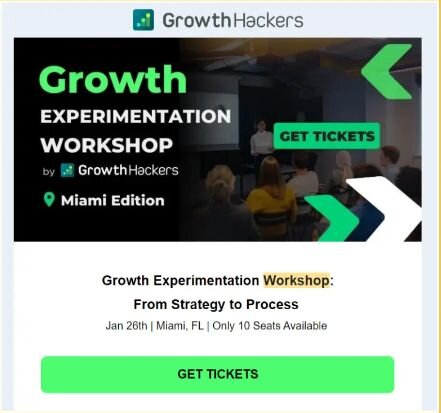
In the GrowthHackers invitation, “From Strategy to Process” tells you the promise, and “Only 10 Seats Available” gives you a reason to act now. It’s still one blast to the whole list, though, and a reader in Berlin gets the same Miami ticket link as a reader in Fort Lauderdale. Segment by geography and by topic, or stop calling it nurture.
For webinars, the better play is a personal video the day before: “We’re covering how three agencies rebuilt their outbound. I’d save you a seat if you reply yes.” Replies beat registration forms, and a person who has said yes to a human shows up.
5. The feedback email: the best one on this page
Here’s the Lumen5 email:
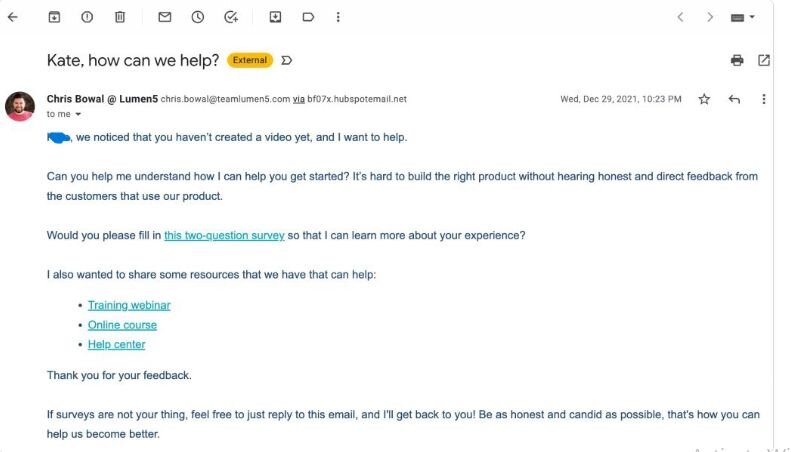
Chris Bowal’s email has everything. It triggers on behaviour (she hasn’t created a video), it comes from a named person, it opens with what they noticed, and it offers a one-line reply for anyone who hates surveys. If you copy a single example from this page, copy this one.
Our B2B version of the Lumen5 email goes to your stalled deals and not-now leads:
Subject: did we get this wrong?
{{first_name}}, you looked at this in March and then it went quiet. That usually means one of three things: wrong timing, wrong price, or we didn’t solve the actual problem.
Which one? One word back is plenty. I won’t sequence you for answering.
And then honour that last sentence, or it’s a lie with a merge tag on it.
The lead nurture sequence we’d run
Calendar-based sequences treat a lead who watched your video twice the same as one who never opened anything. Run the sequence off signals.
| Trigger | Send | Goal |
|---|---|---|
| Signup or “not now” reply | Welcome or acknowledgement from a named person, same day | Get one reply |
| 3 days later, no reply | Educational email with one number they can use | Earn the next open |
| 7 days later | Personalized video with their site in the background | Get a view |
| Video viewed | A short text from the owner, and a call the same day | Book the meeting |
| 21 days of silence | The “did we get this wrong?” email | Get a reason or a clean no |
| Pricing page visit or return visit | A personal note from the owner, whatever the schedule says | Book the meeting |
Pitchlane fires a webhook or a Zapier trigger when someone watches, so the fourth row can run without anyone checking a dashboard. If you’re still choosing the tools for this, we’ve compared them in our lead nurturing software guide.
Lead nurturing email best practices that survive contact with an inbox
Measure replies and booked meetings. Open rates are inflated by Apple Mail’s privacy protection, which loads the tracking pixel whether or not anyone read the email. A test judged on opens tells you nothing.
Keep your spam rate under 0.1%. That’s Gmail’s own target, and 0.3% is where the real damage starts. Nurture lists decay quietly, so suppress anyone with no engagement after 90 days. Sending to dead contacts is how a good domain goes bad.
Add one-click unsubscribe to marketing sends. Over 5,000 messages a day to Gmail, it’s a requirement. Under that, it’s still cheaper than a spam complaint. Run your copy through our spam words checker while you’re at it.
Segment on behaviour first and persona second. “Watched the video” predicts more than “VP Marketing at a mid-market SaaS company”. Job titles tell you what to say, and behaviour tells you when.
Write from a person. Every example above that works is signed by a human. Your logo has never booked a meeting.
Test one change on real volume. A subject-line test on 80 leads is horoscope reading. Wait until a variant has a few hundred sends behind it, then keep the one that books more meetings.
Use names where they belong. First name and company in the subject and opening, per-lead website in the video. Our free spintax tool keeps your wording from looking stamped across a big list.
Make the next nurture email one they’d actually open
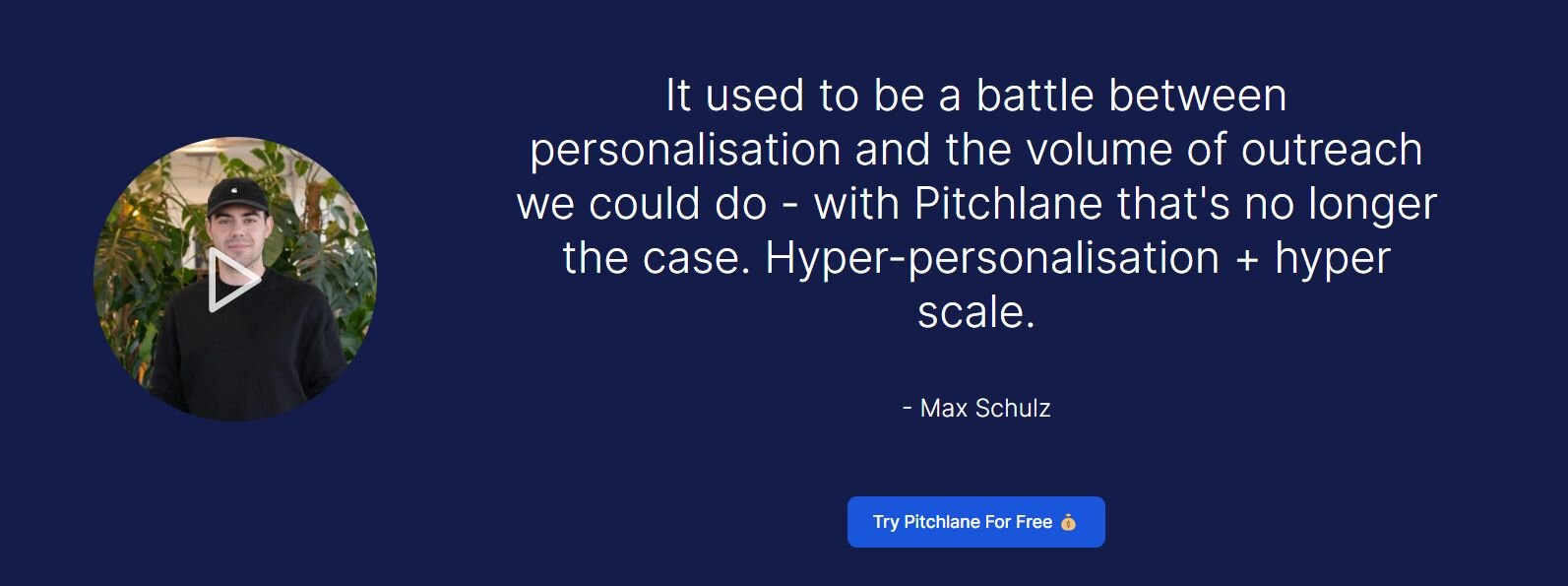
Max Schulz used to choose between personalising his outreach and sending enough of it, and that quote is what changed. Everything above raises the floor. To do something the other 40 emails in their inbox can’t, put your face and their website in the same frame. Record one pitch, upload your nurture segment, and Pitchlane renders a video for every lead with a personalised GIF for the email. It starts at $37 a month for 250 videos, and you can try it free on the leads who’ve gone quiet. They’ve already ignored your drip, so you have nothing to lose.
Questions
Frequently asked questions
What is a lead nurturing email?
A lead nurturing email is a message sent to someone who has shown interest but is not ready to buy, with the aim of keeping the relationship alive until they are. The good ones react to something the lead did, come from a named person and ask for one small reply. The bad ones are newsletters scheduled by calendar day.
What are the best lead nurturing email examples?
The best example on this page is Lumen5's feedback email: triggered by behaviour, signed by a person, opening with what they noticed, and offering a one-line reply instead of a survey. Noah Kagan's Email1K welcome is a close second because it gives a free tool before asking for anything. Copy those two before any template.
How many lead nurturing emails should be in a sequence?
Five or six touches over about three weeks, driven by signals rather than dates. Welcome, one useful number, a personalized video, a same-day note when someone watches it, and a breakup email asking for a reason or a clean no. Anyone who visits pricing or watches twice jumps the queue and gets a human the same day.
How often should I send nurture emails?
Every three to seven days while the lead is engaging, and far less once they go quiet. A lead who has not opened anything in 90 days should be suppressed, not mailed harder; dead contacts are how a good sending domain goes bad. Replace frequency with triggers wherever you can.
What is a good reply rate for lead nurturing emails?
Treat 5% replies on a warm nurture list as solid and 10% as excellent. These are people who asked to hear from you, so the bar is much higher than cold email, where a realistic human reply rate is about 1%. Measure replies and booked meetings, never opens.
What should the subject line of a nurture email be?
Short, specific and lower-case enough to look typed by a person: you downloaded the outbound benchmark, you asked about Salesforce sync, did we get this wrong? Reference what the lead did or said. Avoid anything a marketing team would approve in a meeting, and run it through a spam words checker before sending.
Should lead nurturing emails be plain text or designed?
Plain text, signed by a person, for anything meant to get a reply. Designed templates with headers and buttons read as marketing and get treated like it. The exception is a product update sent to a segment that asked for it, where a clean layout like Lucid's works fine.
Can I put a video in a lead nurturing email?
Yes, and it is the one thing the other 40 emails in their inbox cannot do. Use a personalised thumbnail GIF that links to a hosted landing page, since most email clients will not play embedded video. Pitchlane generates the GIF and page per lead from one recording, with the prospect's own website in the background.
What are the lead nurturing email best practices that matter most?
Write from a named person, trigger on behaviour, keep the spam rate under 0.1%, suppress dead contacts after 90 days, and test one change on a few hundred sends before trusting it. Everything else, including send-time optimisation and subject-line emojis, is a rounding error next to those five.